Archive

Archive for the ‘Theology’ Category

The Prodigal God by Timothy Keller

February 12th, 2011 No comments
The Prodigal God

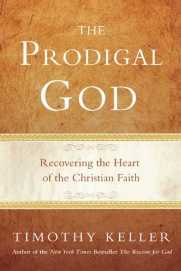
The Prodigal God: Recovering the Heart of the Christian Faith by Timothy Keller

I started reading The Prodigal God: Recovering the Heart of the Christian Faith by Timothy Keller right when I got my Kindle, blazed through most of this amazing book, and then promptly got distracted by a few other books… Well, I finally finished! Keller’s thesis is summarized neatly:

Jesus’ great Parable of the Prodigal Son retells the story of the entire Bible and the story of the human race. Within the story, Jesus teaches that the two most common ways to live [the younger son's estrangement from the father and the elder son's self-righteousness before the father] are both spiritual dead ends. He shows how the plotlines of our lives can only find a resolution, a happy ending, in him, in his person and work.

This is a very quotable and profound book, I hope you will read on (Sorry, it’s going to be a long one!)! Read more…

Categories: Literature, Religion, Theology

The Voyage of the Dawn Treader: A Reprise

December 29th, 2010 2 comments
The Voyage of the Dawn Treader

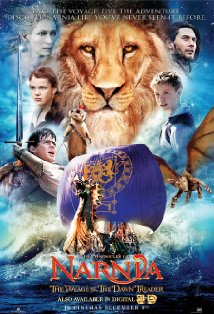
The Voyage of the Dawn Treader - In Theaters Now!

This year on Christmas my mom and Bob came up to Seattle, it was nice to have them up but a strange change from our usual Christmas festivities. While here we decided to go see The Chronicles of Narnia: The Voyage of the Dawn Treader. I am a huge fan of C.S. Lewis in general and of the Chronicles of Naria in particular (you can see some of my reviews here). I have enjoyed the modern films; they are fun and exciting and have captured much of the story of Narnia. That being said, they definitely lack some of the finer theological points that Lewis infused in his writings. Prince Caspian was definitely not as good as The Lion, the Witch, and the Wardrobe (which did include more of the theological underpinnings like Christ’s sacrifice, the conquering of death, and the destruction of the temple…) so I wasn’t expecting much from Dawn Treader but a fun movie. I was pleasantly surprised. While there was some that was taken out ( for example, one specific point at the end – I don’t want to spoil anything, but I can comment on that if you are curious), I was happy to see two of my favorite scenes done very well. It turned out to be a very good Christmas movie to see. You should go see it. Oh, a PS: the kid who played Eustace was brilliant.

Here is my original review of The Dawn Treader. (The review and the following quote have spoilers!) One of the most stirring moments for me is when Eustace is changed from a dragon back into a boy by Aslan:

The very first tear he made was so deep that I thought it had gone right into my heart…. The only thing that made me able to bear it was just the pleasure of feeling the stuff peel off…. Then he caught hold of me… and threw me into the water…. After a bit the lion took me out and dressed me… in new clothes.

Brings me to tears just reading it, every time (and it was very moving in the film). That is transformation. It hurts and it cuts deep. But it is done by the one who isn’t quite safe:

“Safe?” said Mr. Beaver; “don’t you hear what Mrs. Beaver tells you? Who said anything about safe? ‘Course he isn’t safe. But he’s good. He’s the King, I tell you.

Ok, that’s from LWW, but still fits.

Here are my Narnia series book reviews:

  • The Magician’s Nephew
  • The Lion, the Witch, and the Wardrobe
  • The Horse and His Boy
  • Prince Caspian
  • The Voyage of the Dawn Treader
  • The Silver Chair
  • The Last Battle
  • On the Meaning of Christmas

    December 24th, 2010 2 comments

    I don’t actually know that I have anything new to say as I have said it in a number of other posts before. I just want to pause, take a breath and remind people why we celebrate Christmas. It is because you and I are broken people. Some might call us sinners. Regardless, we fall short of perfection. Usually by leaps and bounds. I know I do. In Old Testament days we would have had to offer a blood sacrifice for our transgressions. I think that would get a little old. And bloody. Back in the day they looked forward to the time when all that would go away and we would be redeemed and saved by a mighty king.

    The way God brings things to fruition is often different than the way we imagine they will be. Instead of bringing a powerful political ruler who would protect us from our enemies, God did something much more meaningful and dramatic: He sent His own son to Earth to atone for our failures. To take our brokenness as his own even though he was perfect and blameless. Our crimes imputed to Jesus.

    That is why we celebrate today. Christmas is a celebration because God became one of us so he could die for us. We celebrate Christmas because we need Easter. God with us, Immanuel (עִמָּנוּאֵל): a terrifying yet joyous event. In the words of one of Relient K’s songs: “And I, I celebrate the day / That You were born to die / So I could one day pray for You to save my life.”

    So in the midst of all the chaos that the Christmas seasons brings, take a step back and ponder what it means. Christmas leads to Easter and the Cross. We are hugely and eternally blessed because of that.

    I leave with some of the words of my favorite Christmas song “I Heard the Bells on Christmas Day” written by Henry Longfellow because it is easy to let the other 364 days of the year get us down:

    And in despair I bowed my head
    “There is no peace on earth,” I said,
    “For hate is strong and mocks the song
    Of peace on earth, good will to men.”

    Then pealed the bells more loud and deep:
    “God is not dead, nor doth He sleep;
    The wrong shall fail, the right prevail
    With peace on earth, good will to men.”

    Merry Christmas and God Bless everyone!

    Some of my other Christmas posts:

  • Christmas a Pagan Holiday?
  • Get the X Out of X-Mas!
  • In Which I Talk About Christmas – similar to this post…
  • Providing Water to Families in Africa: Water Filter Comparisons – Since you have been blessed by Christmas, one way you can in turn bless others.
  • Categories: Daily Life, Religion, Theology

    N.T. Wright on Blogging: A Christian Ethic

    April 25th, 2010 6 comments

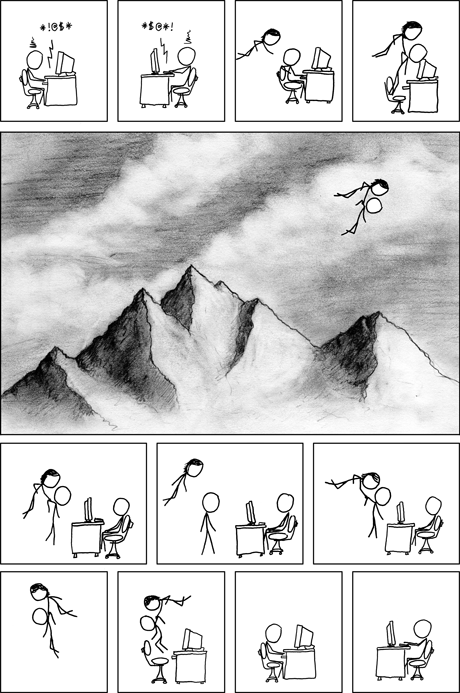
    'It's easier to be an asshole to words than to people.'

    'It's easier to be an asshole to words than to people.'

    I’ve finally had the chance to start reading Justification: God’s Plan & Paul’s Vision, N.T. Wright‘s response to critics of The New Perspective on Paul with specific discussion of Piper’s The Future of Justification: A Response to N. T. Wright. I’m sure I will have comments about the book at a later time (I do definitely fall into Wright’s camp when it comes to placing Paul and his theology firmly rooted in 1st century exilic Judaism), but right now I wanted to share what he had to say in the book’s introduction about blogging. His comments are both insightful and important reminders to those of us who interact in the blogosphere and call ourselves Christians.

    It really is high time we developed a Christian ethic of blogging. Bad temper is bad temper even in the apparent privacy of your own hard drive, and harsh and unjust words, when released into the wild, rampage around and do real damage. And as for the practice of saying mean and untrue things while hiding behind a pseudonym – well, if I get a letter like that it goes straight in the bin. But the cyberspace equivalents of road rage doesn’t happen by accident. People who type vicious, angry, slanderous and inaccurate accusations do so because they feel their worldview to be under attack. Yes, I have pastoral concern for such people. (And, for that matter, a pastoral concern for anyone who spends more than a few minutes a day taking part in blogsite discussion, especially when they all use code names: was it for this that the creator God made human beings?) But sometimes worldviews have to be shaken. They may become idolatrous and self-serving. And I fear that the has happened, and continues to happen, even in well-regulated, shiny Christian contexts – including, of course, my own.

    I hope you aren’t offended by the mouse hover/caption to the xkcd comic, but I found it particularly appropriate for Wright’s comments. In any discussion we have with people we run the risk of our hubris taking over. Humility is crucial and necessary. We should always presume positive intent of those in discussion and we should always write and speak with positive intent. It’s a good rule of thumb.


    Bruce Waltke: Myth, Evolution and Genesis 1-3

    April 20th, 2010 2 comments

    In a previous post (Bruce Waltke and the Reformed Theological Seminary), I noted that (emeritus Regent professor) Waltke and RTS have some differences of opinion on the interpretation which subsequently lead to their parting of ways. Tonight, Waltke posted to his facebook account a note that I have copied below. His comments on how we should approach Genesis should be read well. They help provide a broader context to the argument and help move us away from the argument of “the Bible says it so I believe it” which often doesn’t seem to understand that there is always interpretation going on. From Bruce:

    A critical appraisal of various, influential understandings of the meaning and use of myth demonstrates that in contemporary anthropology myth denotes existential truth but, as was true since Anaxagoras (6th cent. B.C.) not historical truth. Since the biblical writers aim to recount real history, their literature should not be classified as myth. They do, however, borrow mythic imagery, not theology, to deepen in profundity and to heighten in transcendence the significance the symbolic motifs in salvation history, such as “creation” and “exodus.” In that connection they also polemicize against pagan myths, which run counter to Israel’s unique, non-mythic, faith.

    Secular man, however, believes that science, especially the theory of evolution, disproves the historicity of Genesis 1-3. The church has unwittingly played into their hands by pitting the biblical narrative of man’s trajectory from a pristine state through sin to death against the scientific narrative of man’s ascent from simplicity to complexity through death. Those who accept both modern critical historiography and the Scripture’s inerrant and infallible testimony, to be credible, must address this tension.

    William Dempski, (born 1960), professor of philosophy at Southwestern Baptist Theological Seminary and Fort Worth, Texas and a prominent member of Intelligent Design, explains the fossil evidence of death before the creation of man by arguing that the eternal, non-temporal God always sees the Fall of man and within time reckoned its consequences, using death in the process of evolution, before the historical Fall. He defends this view by the analogy of the Cross. Before Christ’s historical crucifixion the eternal God sees the vicarious death of Christ and reckoned its consequences within time to his elect before the historical cross. Before reading Dempski this writer thought of the same resolution of Science and Scripture, but had to admit to himself, were it not for modern science, none would have guessed that scenario from the Bible. It strikes one as a rabbinic pilpul (derived from pilpel, ‘pepper’), a sharp exegesis to resolve a contradiction.

    A better harmonization is a multi-perspectival view of creation. This view/theory consists of three coherent principles 1.) Genesis 1-3 cannot be interpreted woodenly and should not be over-read; 2.) darkness and sea, symbolic motifs of surd (“senseless”) evil in the physical world, and the Serpent, the symbolic motif of moral evil in the spiritual/moral world, are restrained in the present time between Primordial time and Endtime; and 3.) Genesis 1-3 and biblical theology give a multi-perspectival view of paradoxes, such as good and persistent evil in the world as we know it.

    I. GENESIS 1-3 NOT TO BE INTERPRETED WOODENLY NOR OVEREAD
    This first principal is built on three assumptions regarding the Genesis accounts of creation: 1.) as text, they cannot be read in a straightforward way; 2) as theological literature, they present a vision of salvation history for the People of God ; 3) as history, they do not attribute all death to the Fall.

    A. As text cannot be read in a straightforward way

    The Creation accounts cannot be read as straightforward history for at least two reasons: they are figurative and temporally incoherent. The accounts represent the main actor, God, in unrelentingly anthromorphic/anthropopathic” figures. The statements God ‘said,’ ‘commanded,’ ‘saw,’ and ‘called’ prompt us to envision vocal cords, but God is spirit, not corporeal. The reference to “days” and to “evening and “morning” at the end and beginning of each day according to biblical usage refers to consecutive twenty hour days. The narrative anthropomorphically represents God as a Laborer, who works in daylight and rests at night. Exodus 31:17 represents God, who never grows weary, as refreshing him on the seventh day. Mark Futato, professor of Old Testament at Reformed Theological Seminary asks, “If his refreshing himself as a workman on the seventh day is an obvious anthropopathism, is it not probable that his working on the other six days is also an anthropopathism?” In the second account God is represented as a Potter, fashioning the man; a Husbandman, planting a garden; and a Temple Builder, fashioning a woman. These metaphors, extended as allegories, represent historical actualities.

    The temporal incoherence in the first account was recognized at least as early as Origen (185-254), centuries before the Copernican revolution: “For who that has understanding will suppose that the first, and second, and third day, and the evening and morning, existed without a sun, and moon, and stars? And who is so foolish as to suppose that God, after the manner of a husbandman, planted a paradise in Eden….” In An Old Testament Theology I also call attention to the impossibility of resolving the chronological tension between the two biblical creation accounts. In the first account God causes the earth to bring forth flora on the third day and creates mankind on the sixth day. In the second account God, having “planted a garden” and having “caused the trees to grow,” puts man in the Garden and there gifts him with his bride. The garden could not have been planted on third day and have matured by the sixth day. The anthropomorphisms of planting trees and causing them to grow exclude the notions that the trees were created with apparent age or that they grew miraculously. Turning to other narratives in Genesis 1-11, R.W.L. Moberly, in an excellent chapter, “On Reading Genesis 1-11,” demonstrates the difficulty of reading the Cain and Abel and Flood stories in a straightforward way. The narrator, I assume, left these obvious anomalies in the text to prevent a straightforward reading and to cause his reader to reflect on what he is up to.

    B. As theological literature presents a vision for the People of God

    Meir Sternberg validated that three interrelated principles are at work in biblical narrative: historiographic, ideological, and aesthetic. The narrator ties the creation into real history by means of structuring the book by ten toledoths (descendants of), beginning with the first toledoth, narrating the creation of the cosmos, and terminating with the tenth toledoth, narrating the descent and settlement of Jacob’s family in Egypt.

    To extrapolate the theology of Genesis 1-3 one first has to consider its aesthetics. To paraphrase Adele Berlin: we don’t know what a text means until we know how it means, such as through structure and climax. Consider these two aesthetic features of the two biblical creation accounts. The first reaches toward a climax with God celebrating his creation of mankind in a poem and then climaxes in the last line of chapter 1: “God saw all that he had made, and it was very good” (1:31). The second account likewise reaches for a climax with a poem by Adam about his wife and then climaxes with a poignant statement that they were both naked, but not ashamed—that is to say, untainted by sin. Genesis 3 presents the bouleversement of the good and unmarred creation. That narrative also reaches towards a climax with a poem and reaches its climax with man and woman permanently banished from the Garden. In sum, Genesis 1-3 depicts the creation of the world and humans as beautiful and good and the ruin of both as the tragic consequences of their hubris.

    Moreover, the story is written for a later audience, Israel. All the characters, including God, speak Hebrew. Moberly likens it to all story telling, citing Shakespeare: “When Shakespeare depicts all the character in Julius Caesar or Coriolanus s speaking Tudor English in the context of ancient Rome, one would be unwise to assume that Shakespeare was making a historical claim about the language of ancient Rome rather making the scenario accessible to his contemporaries.” The narrator, like Shakespeare, is presenting history to communicate a perspective comprehensible to his audience. Through his visionary representation of the historical creation, he gives Israel archetypes, paradigms, lenses, to interpret her world as God’s good gift.

    The vision of the creation accounts stands in marked contrast to that of Richard Dawkins, a blasphemous missionary for atheism. Dawkins devilishly tries to persuade modern man that the selfish gene uses its human host only to survive, uncaring and indifferent to the means for survival.

    Nevertheless, one ought not to over read Genesis 1-3 in such a way to make it say that all surd and moral evil is due to sin. Quite the contrary; both creation accounts narrate the presence of evil in creation and before the historic Fall.

    II. DARKNESS AND SEA IN SALVATION HISTORY

    1. Genesis: chaos restrained
    People commonly think that Genesis 1-3 narrates an unmarred, pristine creation out of nothing before the Fall and that the final stage of world history will be a restoration of the original state, “Endzeit gleicht Urzeit.” But that notion falsifies salvation history. Rather, as Jon D. Levenson, professor of Jewish Studies at Harvard, says: “the point of the creation is not the production of matter out of nothing, but rather the emergence [out of chaos] of a stable community in a benevolent and life-sustaining” The account represents the earth’s primordial state, before its transformation by wind and word, as senseless with regard to human well-being, blanking the reason for existence of the surd (Gen 1:2). God’s commands in connection with his dynamic ruah (wind/spirit) over the abyss transformed the uninhabitable, mysterious chaos into a cosmos, both beautiful and beneficial to mankind. However, the Creator does not banish the primordial “eggshells”: darkness and sea; rather he restrains the symbolic motifs of chaos by the symbolic motifs of cosmos: light and land (see Psalm 104:6-9). In the End time, however, he will eliminate, not merely restrain, the surd, primordial elements (Rev. 21:1-5, 23), implying that even the before the Fall, creation is not pristine, but threatened by evil. Turning to the Garden in the supplementary Genesis creation account, the situation is also less than pristine. The Garden where God walks is also locus of the den of the Serpent, the incarnation of moral evil, who socially destroys humankind, alienating them from God and one another. The creation is good but not perfect; surd and moral evil exists in world before the Fall.
    The Flood story assures us that although God through the Flood reversed the creation back to its original state, apart from preserving his creation on Noah’s ark, he will never again undo the creation in history before End of time.

    2. Prophets and psalmists: chaos conquered
    The Genesis accounts suppress the motif of surd and moral evil (i.e., what is opposed to life). Israel’s poets develop it. They use broken Canaanite myths about Rahab and Leviathan to reveal the transcendent meaning of his restraining the sea: his first salvific act, an assurance of his triumphant victory over evil. Consider Job 26:12-13 and, cited here, Psalm 89:9, 10:

    You rule over the surging sea;
    when its waves mount up, you still them.
    You crushed Rahab like one of the slain;
    with your strong arm you scattered your enemies.

    Note also that the psalmist refers to I AM’s vanquishing and controlling the Sea. Isaiah also used the imagery of vanquishing the sea to portray I’AM’s final triumph over the ultimate enemy restraining salvation history: “In that day, the LORD will punish with his sword– his fierce, great and powerful sword– Leviathan the gliding serpent, Leviathan the coiling serpent; he will slay the monster of the sea” (Isa 27:1). Clearly, the primordial darkness and the sea/abyss stand opposed to the God of life.

    3. The maturing sage Job complains that God’s covenantal promises to bless the righteous and to curse the wicked are detached from his reality. God’s response to Job’s complaint (Job 38-41) gives more insight into the presence of evil apart from the consequences of sin. Note the literary context of God’s response. The book of Job aims, among other things, to debunk the notion that all evil is due to sin. Job is introduced as a blameless and upright man (Job 1:1), but he suffers more than any other apart from Jesus Christ. In the dialogues between Job and his three friends, (chapters 3-37) the friends, insisting that all suffering is due to sin, trump up charges against Job, but Job draws the discourse to a conclusion with two extended oaths that he is innocent. In the book’s narrative conclusion God expresses his anger at Job’s friends for not speaking what is right; they falsely accused Job to justify their theodicy. Christian theologians likewise, by their under-reading and over-reading of Genesis 1-3, tend to justify the presence of all evil by appealing to Adam’s fall. The book of Job stoutly rejects that notion.

    The scenic depiction of God’s address to Job sets the context for the message: God speaks out of the eye of a tornado (38:1). God rules the deadly tornado without eliminating it, just as he restrains Satan without eliminating, him (1:12; 2:6). God’s initial questions to Job link the address with the Genesis symbolic motifs of evil: sea and darkness. “Who shut up the sea behind doors when it burst forth from the womb, when I made the clouds its garment and wrapped it in thick darkness, when I fixed limits for it and set its doors and bars in place, when I said, ‘This far you may come and no farther; here is where your proud [mine] waves halt’? (Job 38:4-11). God protects the symbolic primordial sea, even though it opposes life, but he restrains it with the arable land that mankind can farm. Paradoxically, God both restrains and protects that which is hostile to human existence.

    God now matches the motif of the primal lawless sea with lawless humans who find the darkness of night their light. In God’s dominion both light and darkness have their place. At the middle of his first address, God transitions from what is inexplicable in the cosmos from the human viewpoint to the wild and the strange animal kingdom: “Do you hunt the prey for the lioness and satisfy the hunger of the lions: when they crouch in their dens or lie in wait in a thicket? 1 Who provides food for the raven when its young cry out to God and wander about for lack of food? (Job 38:39-41). That is to say, God arranged the predator-prey syndrome independently from sin. In the second address (chapters 40-41), God torques the reality of evil by challenging Job to bring under his rule the repressive land monster, Behemoth, and the repressive sea monster Leviathan. Job cannot tame them and God does not eliminate them.

    In sum, Israel’s poets moderate the symbolic motifs of sea and darkness from a minor key in the prose creation narratives of Genesis 1-2 to a major key in poetry. Apart from the Fall, the creation exhibits God’s restraint and rule of evil. Creation by the process of evolution, I argue, harmonizes with this biblical witness. God creates and sustains life paradoxically and mysteriously through death. If one has ears to hear, creation by the process of evolution best fits this biblical montage. Darwin and Dawkins are unwilling to allow God the freedom to rule; they insist he must rule by their dim lights.

    III. BIBLICAL THEOLOGY GIVES A MULTI-PERSPECTIVAL VIEW OF REALITY

    A biblical theologian notes the diverse theologies in the Bible. Christian lay persons commonly discern that the four gospels present diverse perspectives of Jesus Christ’s career. Human authors, living in diverse situations with sundry spiritual needs, tailor their theologies to meet those needs. The Deuteronomist, writing to bitter exiles, shapes Israel’s history to teach that they, not God, failed to keep covenant. The Chronicler, by contrast, writing to a discouraged post-exilic community, shapes their history to ennoble them; theirs is a noble heritage and they are the legitimate heirs of God’s covenants.

    Turning to the multi-perspectives in the psalms, compare Psalms 2 and 3. In the introductory psalm God tells his newly minted king: “Ask me, and I will make the nations your inheritance, the ends of the earth your possession.” (Psalm 2:8). In the subsequent psalm the royal son responds: “LORD, how many are my foes! How many rise up against me! Many are saying of me, ‘God will not deliver him.’” The anointed king’s rule involves triumph through tragedy.

    Consider the next twelve psalms, including Psalm 3. After six lament psalms (3-7), the editor of the Psalter inserts a hymn of praise, celebrating the rule of “little children” (i.e., the humble and trusting mortals): “You have made them a little lower than the heavenly beings and crowned them with glory and honor. You made them rulers over the works of your hands; you put everything under their feet.” After another six essentially lament psalms the collector inserts a psalm deploring humankind’s rejection of God: “The LORD looks down from heaven on the human race to see if there are any who understand, any who seek God. All have turned away, all have become corrupt; there is no one who does good, not even one” (Psalm 14:2-3). Both visions are necessary to apprehend the truth.

    The De Medici family nobly bequeathed to humanity marvelous art, but they did so by ignobly persecuting saints. We admire the art and deplore their sin. Truth is found in paradox, not contradiction. The Author of the Bible, using diverse human voices in diverse circumstances, orchestrates the paradoxes to present the truth. So does creation by the process of evolution present truth through paradox.

    God bequeathed mankind with a good earth and at the same time retained, restrained and ruled, without eliminating, surd and moral evil. God’s process of creating through evolution entails both the symbiotic advancement of life and death; The muti-perspectival view of creation by the process of evolution is more theologically accurate than the traditional view that all surd and moral evil are due to the Fall. Creation by the process of evolution agrees with Reformed theology.
    You should also check out Justin Taylor at The Gospel Coalition: Updates from Waltke and from RTS with some of Waltke’s original response to all the commentary on his resignation. Stackhouse’ comments on the matter are also a good read. And, of course, my post: Bruce Waltke and the Reformed Theological Seminary.

    Bruce Waltke and the Reformed Theological Seminary

    April 12th, 2010 No comments

    [Update]Check out Bruce Waltke: Myth, Evolution and Genesis 1-3, an new note from Dr. Waltke. [/Update]

    Bruce Waltke, professor emeritus from Regent College, has resigned from the Reformed Theological Seminary because of making statements about “why the church must accept evolution” (even if he would rather have said “should” as opposed to “must”). There have been a number of blog posts and comments in response to this news. Many of them, which I will link to below, have said things much better than I so I will keep my comments short. Both parties have been very amicable in the split; you can read Waltke’s statement here and RTS’s statement here. As I said, very cordial in nature. But being mature Christians and wanting to avoid any unnecessary schisms and problems within the church doesn’t give RTS a free pass here.

    If you have read my blog before, you know that I have a background in the sciences and definitely don’t buy into the Young Earth Creationist stories. I believe they have incorrectly interpreted Genesis and its creation narrative. Waltke is an expert in Old Testament Theology and Genesis is something that he has spent lots of time around. He is definitely one to understand the cultural and literary context of the creation narrative. If he can find a place for evolution in that narrative, I think we should be fine with it as well.

    A few of the blog posts worth checking out:
    John Stackhouse: RTS, Bruce Waltke, and Statements (and Non-Statements) of Faith:

    Reformed Theological Seminary (RTS) has dismissed Dr. Bruce Waltke because he recently stated publicly two radical convictions: (1) that a Bible-believing Christian could believe in evolution; and (2) that the church needs to beware of becoming a cultural laughingstock for retaining anti-evolutionary views that cannot be supported scientifically.

    What’s pathetic about this action is that those points weren’t even radical in the nineteenth century, when Darwin himself had a number of orthodox defenders. So RTS apparently is not quite ready to catch up with almost two centuries of theology/science dialogue.

    Read the full post. There are also some good discussion happening in the comments (along with a number of asinine comments as well).

    Regent College’s Cosmos by Ross Hastings: Resignation of Bruce Waltke over issues of science and faith:

    Our own majority view on this Cosmos project is that Genesis 1 and 2, as interpreted in light of its literary genre and in light of its ancient near eastern context, is about theology and not chronology. As such it permits a harmonization with the best theory true science can offer for the way in which our cosmos and humans came into being. Do we insist as a faculty at Regent that all must hold to this to teach here? This would be to exalt a non-confessional issue as a ground for unity in a manner that mitigates against the apostolic appeal for unity which is based on foundational, Trinitarian essentials (Ephesians 4:4-6)

    Wonderfully said! I think this is a key distinction that Creationists miss: interpretation in light of literary genre and cultural context. Creationists seem to think they don’t interpret, they just have a “plain reading” of the text. They say this without realized that they ARE making an interpretation when they make those statements.

    Conrade Yap: Another Video Bites the Dust (On Dr Bruce Waltke’s Resignation from RTS):

    From day one, the Internet has the potential to provide both information as well as misinformation. Given the spread and ease of information distribution electronically, it is important for us to be wise and discerning on the use of information. Right use leads to enlightened minds and grateful hearts. Abuse leads to unhealthy controversies and bitter arguments.

    Thanks for providing some perspective Conrade!

    Anyone want to add their $.02? Any Young Earthers want to chime in?

    Some of my previous and related posts:
    The God of the Bible is also the God of Science
    Creation Science
    Science vs. Religion

    Also, some notes from Waltke and Peterson’s Regent Tradition Conference back in 2005.
    Feel free to check them out!

    The Gospel: Good Friday leads to Easter

    April 4th, 2010 2 comments

    Χριστός ἀνέστη!

    I love theology; discussing Theos and any and all ideas relating to Him. But it annoys me when many Christians feel we need to go “deeper”. Yes, I am a proponent of deep theological studies. But I think most of the time we need to focus on what is quintessential to our lives: The Gospel. Really, why would we ever need to go deeper than that? We are broken, we cannot make up for our shortcomings, God in his infinite mercy and grace sends his only Son to atone for us, to be the innocent slain lamb. We are truly justified by grace. His resurrection was the final blow; God reigns. That is deep. The Gospel. Simple yet crucial and beautiful.

    On Friday, we saw the beautiful tragedy. There, Jesus’ work was finished and the effects of that work are still being felt. We live in the post-Easter world. Jesus returned and holds the priesthood forever. He is calling us to be a part of his Kingdom, his family. That is an offer that no other religion can offer; I think it is worth checking out.

    Previous posts:
    The Resurrection including Updike’s Seven Stanzas at Easter:

    Let us not seek to make it less monstrous,
    for our own convenience, our own sense of beauty,
    lest, awakened in one unthinkable hour, we are
    embarrassed by the miracle,
    and crushed by remonstrance.

    The Passion of Jesus Christ
    The Seven Words of Jesus on the Cross – from the Good Friday gathering at All Saints.
    The Reality of Easter
    Τετέλεσται: Some thoughts on John 19:30

    Happy Easter! He is Risen!

    Χριστός ἀνέστη! Ἀληθῶς ἀνέστη!

    Categories: Daily Life, Religion, Theology

    Written Influences on my Faith

    March 5th, 2010 No comments

    Recently, Cori asked about books that have influenced our journey of the Christian faith. I thought that was a great question and a difficult one to answer. I thought I would reproduce my response here:

    This is a daunting task: how to narrow influential books down to a short list? These are a few that I have found profound and insightful. There are plenty more where this came from, but these jumped out at me.

    1. A Long Obedience in the Same Direction by Eugene Peterson – I think this is a MUST read for every Christian. Peterson uses the Psalms of Ascents as a framework for talking about the Christian Life. Peterson is the one who wrote the Bible paraphrase “The Message” and is considered a spiritual theologian.
    2. How to Read the Bible for All Its Worth by Gordon Fee – a wonderful discussion about the reality of Bible reading and how it should be approached. In my opinion, this is another MUST read for every Christian. Gordon Fee was part of both the NIV and TNIV translation committee, is the general editor for a pretty major commentary series, and has done a lot for textual criticism and exegeses.
    3. Silence by Shusaku Endo – A difficult book about apostasy. Helped me continue thinking and realizing that there truly are difficult questions that we could wrestle with, black and white isn’t always the order of the day. Shusaku Endo I know the least about, but his novel was quite thought provoking.
    4. The Art of Biblical Narrative by Robert Alter – somewhat heavy, but provides wonderful context for the OT: how it all fits together. Robert Alter is a Hebrew scholar and has done a lot with the OT.
    5. Pretty much anything and everything by NT Wright, especially The Challenge of Jesus: Rediscovering Who Jesus Was and Is. Pure brilliance. Wright is the Bishop of Durham and is an extremely prolific New Testament theologian (often with a focus on Pauline theology).
    6. Return of the Prodigal Son by Henri Nouwen – A beautiful look at the Christian spiritual life through the lens of Rembrandt’s painting of the same name (my favorite painting!). Nouwen was a Catholic priest who wrote numerous books on spirituality.
    7. Beyond the Cosmos by Hugh Ross – one of my first explicitly Christian/Scientist perspective and the marriage of those worlds. Hugh Ross run as organization called Reasons to Believe that aims to “bridge the gap between science and faith.”


    Wow, hard to narrow it to seven! Did I really leave out Lewis??

    What about you? What writers have influenced your walk? Most of mine our non-fiction writers. That isn’t to say fiction can’t influence, it just wasn’t for me—although there is still Lewis. I still don’t know how I left out works like Screwtape Letters and The Great Divorce…

    Categories: Literature, Religion, Theology