Archive

Archive for the ‘Science’ Category

Space Saturday XXXVI: The Rosette Nebula

February 26th, 2011 No comments

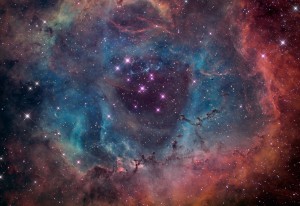
The 36th edition of Space Saturday brings us the Rosette Nebula.

The Rosette Nebula

The Rosette Nebula

This beautiful image of the Rosette Nebula comes to us from Brian Lula (source) and is found in the constellation Monoceros. Nebula is about 5300 light years away and contains hot, young X-ray emitting stars at its center.

Inside the nebula lies an open cluster of bright young stars designated NGC 2244. These stars formed about four million years ago from the nebular material and their stellar winds are clearing a hole in the nebula’s center, insulated by a layer of dust and hot gas. Ultraviolet light from the hot cluster stars causes the surrounding nebula to glow.

For more astronomy pictures, check out my Space Saturday Archive.

Categories: Science

The Powers of Ten

February 3rd, 2011 No comments

I remember seeing Powers of Ten in science class when I was a kid. I thought it was pretty awesome then and I still do now!

The film has been uploaded to Youtube for all to view now! The film was produced back in 1968 and what we know about the world of the very large and the very small has grown by leaps and bounds, but this film’s take on perspective was done so well that it still inspires a sense of wonder. The universe is a pretty huge and awesome place! Take a look:

Pretty great, eh?

Categories: Education, Science

Space Saturday XXXV

January 29th, 2011 No comments

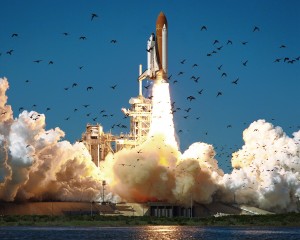
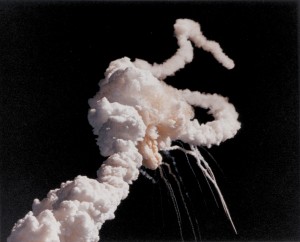
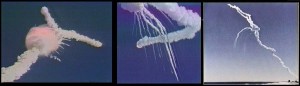
In this somewhat somber Space Saturday I commemorate the loss of Space Shuttle Challenger and the 7 crew members aboard. 25 years ago yesterday at 73 seconds into the flight, aerodynamic forces broke up the craft (not an explosion as is commonly thought) due to a failed O-ring in the right side solid rocket booster.

STS-51L - Space Shuttle Challenger

STS-51L - Space Shuttle Challenger at Liftoff - Click for larger version

The Space Shuttle Challenger Disaster

Destruction of the Challenger

In January of ’86 I was six but I do remember the devastation that this catastrophic failure brought. It is sad that this disaster was preventable. It is sad that it happened again with Columbia. I think the worst part of the tragedy is that it is very likely the 7 crew members were alive for the almost 3 minutes after the shuttle broke up on the trajectory back toward impact with the ocean. I cannot imagine their terror during that time (although hopefully they were unconscious). It was a sad day indeed. Never forget the men and women who have given their lives for science.

Resources:

For other astronomy pictures, check out my Space Saturday Archive.

Categories: Science

My Space Shuttle Tile

January 16th, 2011 No comments

I’m a space nerd. It might have something to do with astronomy being one of my majors back at UW, it may have to do with all the Star Trek and Star Wars I have watched, or it might just be part of the inherent wonder that is space. Regardless, I am a space nerd. Anything NASA I love. I love From the Earth to the Moon, When We Left the Earth, In the Shadow of the Moon, and any other video I can get my hands on. I can watch launch videos like this over and over. I remember when the Challenger exploded after liftoff and the Columbia breaking up as it reentered the atmosphere; devastating me. While I look forward to the future of manned spaceflight, it is somewhat sad to see the Shuttle Transportation System come to an end later this year.

As part of the decommissioning of the shuttles, NASA is allowing educators to have a piece of the program. Space Shuttle Tiles for Teachers:

NASA is now offering space shuttle tiles to educational institutions. Would you like to have a piece of history for your classroom or lecture space? Sign up now because a limited number of tiles are available on a first-come, first-served basis.

I went through the (fairly involved) procurement process and just received my very own (well I suppose technically my school’s) tile!!

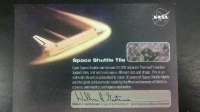
Each Space Shuttle carried over 24,000 separate Thermal Protection System tiles, and each one was a different size and shape. This is an authentic tile and is presented to honor 30 years of Space Shuttle flights and the great achievements made by the men and women of NASA in science, aeronautics, and space exploration.

Here is a bunch of info about the Space Shuttle Thermal Protection System tile. My piece does say “Training Only” on it which I suppose could mean it hasn’t actually been to space, but really, I don’t care. It has been on the shuttle, is part of the incredible program and a piece of history. For more info and links, check out the Space Shuttle Tiles for Teachers website.

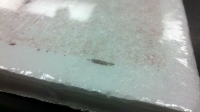
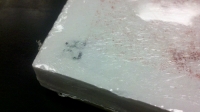
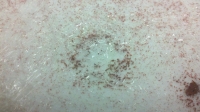
This may not seem like a big deal; it is a fairly tiny (around 20cm square and 1cm thick) piece of lightweight (but amazing) ceramic. But I am very proud to have just a little bit of NASA and Space Shuttle history!

Images of my tile (click for larger version) (Oh, and I should note: the tile is wrapped in plastic, that is why there is a glare):
Categories: Education, Science

Space Saturday XXXIV

January 8th, 2011 No comments

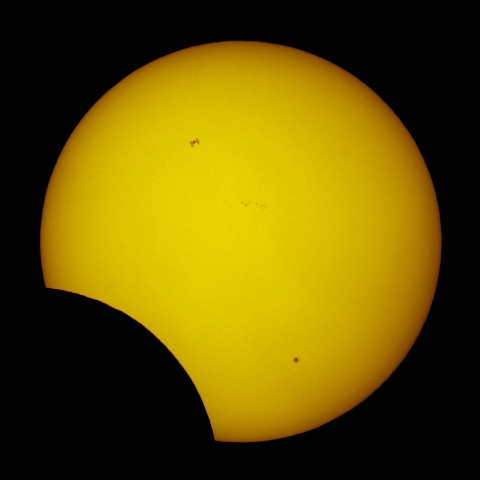
Welcome to the next edition of Space Saturday! This week’s edition comes from Tuesday’s partial Solar Eclipse.

Partial Solar Eclipse and ISS Transit

Partial Solar Eclipse and ISS Transit

The ISS transits the partially eclipsed Sun.

The ISS transits the partially eclipsed Sun.

A partial Solar Eclipse started in Northern Africa and traveled Northeast through Europe and back South into Russia. Astrophotographer Thierry Legault traveled to Oman to capture the event (source and credit for the photograph). He visited Oman because that choice allowed him to capture the International Space Station as it made a transit across the partially eclipsed Sun. Pretty amazing capture!

And from the Bad Astronomer:

To give you an overall idea of what you’re seeing here: the Sun is 147 million kilometers away (less than usual because this eclipse happened, coincidentally, very close to perihelion, when Earth was closest to the Sun). The Moon is 390,000 kilometers away. The Sun is about 400 times bigger than the Moon, but also about 400 times farther away, making them look about the same size in the sky. If you’re still having a hard time picturing the scale, take a look at the dark sunspot in the lower right of the big picture: it’s about twice the size of the Earth!

The space station, on the other hand, is 100 meters across (the size of a football field) and orbits about 350 km (210 miles) above the Earth’s surface. So the Moon was very roughly 1000 times farther away than the ISS when this picture was taken, and the Sun 400,000 times more distant. Yet all three lined up just right to make this extraordinary photograph possible.

Awesome!

Be sure to check out my Space Saturday Archive for more astronomy photos.

Categories: Science

Space Saturday XXXIII

January 1st, 2011 No comments

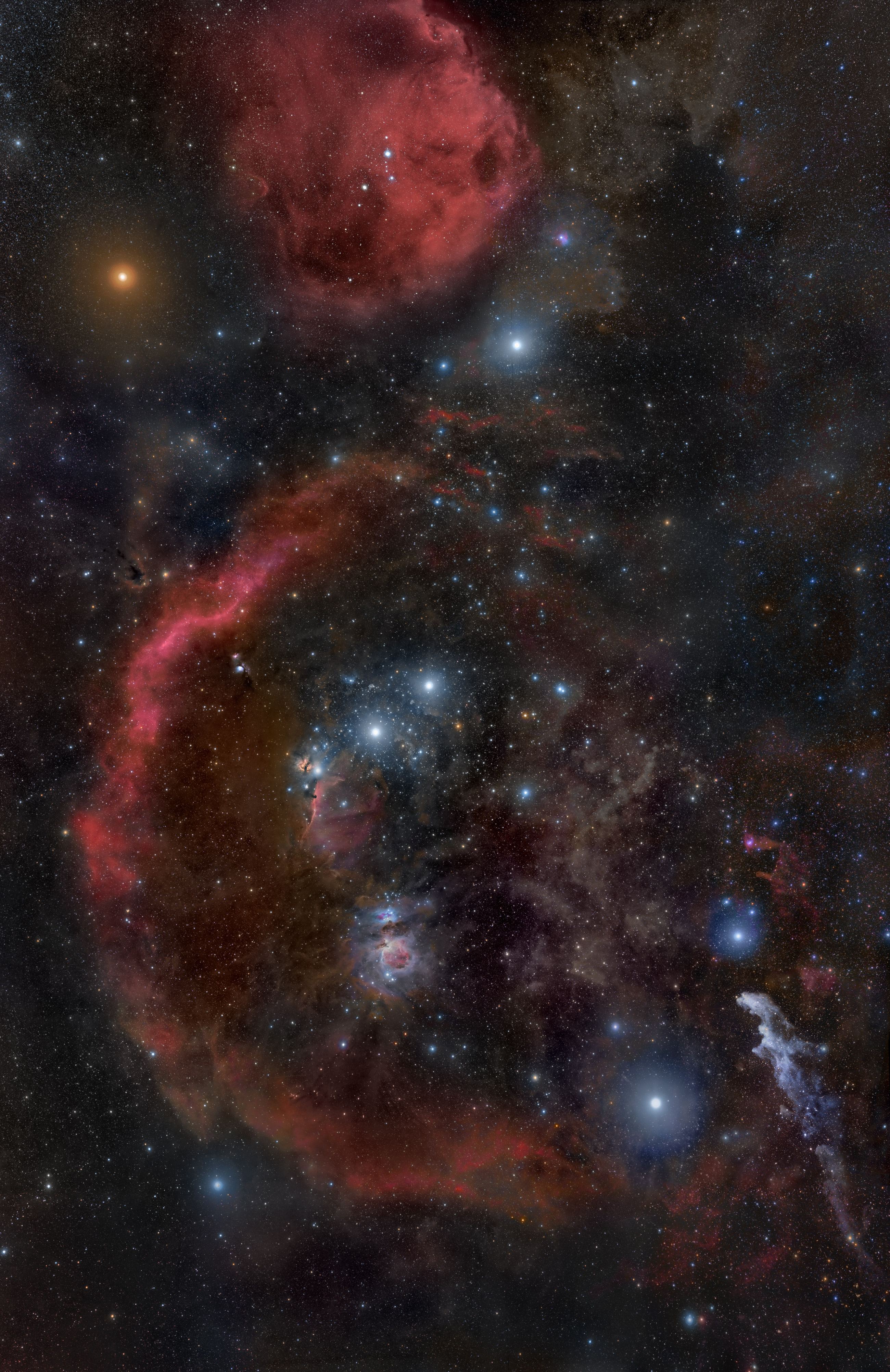
Well it has been over two years since I have posted a Space Saturday! That’s pretty ridiculous. Let’s get a new one up, shall we? I bring in the new year with this: The Constellation Orion!

Orion
“Orion: From Head to Toe” (Click for larger image. Source.)

Hopefully you are able to recognize the constellation Orion as it is one of the most recognizable asterisms in the Northern Hemisphere’s night sky. What you may not be familiar with is the mess of stuff visible in the image above. From the description:

Cradled in cosmic dust and glowing hydrogen, stellar nurseries in Orion the Hunter lie at the edge of a giant molecular cloud some 1,500 light-years away. Spanning nearly 25 degrees, this breath-taking vista stretches across the well-known constellation from head to toe. The Great Orion Nebula,the closest large star forming region, is right of center. To its leftare the Horsehead Nebula, M78, and Orion’s belt stars. In this 3×8 mosaic of broadband telescopic images, additional image data acquired with a narrow hydrogen alpha filter was used to bring out the pervasive tendrils of energized atomic hydrogen gas and the arc of the giant Barnard’s Loop. You can also find Betelgeuse at the hunter’s shoulder (upper left), bright blue Rigel at his foot (lower right), and the glowing Lambda Orionis (Meissa) nebula at the top, near Orion’s head. Of course, the Orion Nebula and bright stars are easy to see with the unaided eye, but dust clouds and emission from the extensive interstellar gas in this nebula-rich complex, are too faint and much harder to record.

Good way to start off the year, isn’t it? It is pretty incredible to think that when we look at the bright stars of Orion there is so much more there that we cannot see with our eyes! Be sure to check out the larger image because it is gorgeous!

Be sure to stop by my Space Saturday Archive for previous editions!

Categories: Science

Providing Water to Families in Africa: Water Filter Comparisons

November 25th, 2009 5 comments

A number of people I know have mentioned the Blood:Water Mission and I have even supported a book reading challenge to raise money for that cause (still time to support her!). They are an organization looking to help out Africa. In their own words:

We’re a group of passionate people who have been inspired by our friends in Africa, friends who face unbearable challenges from the HIV/AIDS and water crises. We creatively and thoughtfully raise awareness and the necessary funds for the provision of clean blood and clean water in sub-Saharan Africa.

When they came out with their Christmas Clean Water Challenge, I was very interested in chipping in and helping out. This desire started a very insightful conversation between me, a few friends, and two different water filtration proponents.

The discussion started when Vimal, who has worked with water filtration systems in Africa, was curious about the $85 cost for the biosand water filter through Blood:Water Mission’s Christmas Challenge. This is the conversation that we had (hope you are ok with this Vimal!):

Vimal Shenoy: 85 bucks? How many filters? That’s an expensive filter for developing countries. When I did water filtration work in Africa, our filters cost less than $25 to make and distribute… But whatever.

Matt Jones: Here, watch this video, tell me what you think.

Vimal Shenoy: interesting… if it’s true that it’s good for 20 years, then it may be worth it, though wikipedia only cites 10 years. there’s a lot of factors to consider when choosing water purification means, so I’m not going to diss this means.

Matt Jones: What system did you guys use? I am curious what the differences are and if there are different benefits to either of them. They might be interested in checking out other options as well. Another guy I know used these filters in Haiti and passed on the link. I think this is an important discussion to have because I always get frustrated when non-profs are not using their money wisely. I trust Blood:Water Mission and would love to pass on any other info on what you used.

Vimal Shenoy: yeah, we used potters for peace. I could come downstairs and explain more… but for sam’s sake i’ll put a brief blurb. Basically what we used were what looked like flower pots, the most expensive parts being the plastic pot and spigot. We went to an organization within Benin and taught them how to make them properly and they make them in country with materials there (dirt, coconut shells, whatever else you use in pots). When we left them they were selling them for 25 dollars or so, but we calculated that if they made the plastic parts there, they could sell them for less than 10 dollars, which is a significant difference in that area of the world. Replacement filters after ~10 years is 4-6 dollars, so maintenance is low… take a look at this.

Vimal Shenoy: the greatest downside is the rate of water filtration. only 2.5 liter per hour as opposed to 40 in the other system. but if you distribute these on a household level, they are definitely worthwhile. 2.5 litres x 10 hours is enough for everyone to drink in a household.

Matt Jones: Awesome! That is good information to have. I imagine that the most expensive part of the biosand filters is the “biological layer” (whatever that is). I will definitely pass that on. I am assuming they have looked at other options as well, but have other options available is always good.

As you suggest, there could definitely be benefits to either system and context probably means a lot. It would be good to hear from the organization about how they picked this particular method.

Matt Jones: Got a pretty good response from the Blood:Water Mission people, here is a part:

“As a part of this program, every family wanting filter sends a family member to a three day training held at the compound. As a part of this training, the family member learns about biosand filters, how to maintain the filter, as well as the basics of hygiene & sanitation (there are complete hygiene & sanitation trainings done in villages separate of this training). They also make their own biosand filter, which is then installed in their home at the end of the week. This is a much more intensive process in terms of space, personnel, and time than is typically used in biosand filter programs, but we have found that it is very effective in terms of local empowerment and sustainability. This cost also pays for some follow-up from staff to make sure that everything taught in the training is being implemented in the homes.”

Vimal Shenoy: ah very good. i see now why the cost is somewhat elevated. but with that follow up that’s really good. interesting.

Matt Jones: Indeed. I suppose the important part is not just the cost of the filter at all, but the cost of training and providing resources to help with sustainability and positive practices.

Matt Jones: I just got this from Potters for Peace:

“On our website there is a comparison study, at least one, on the ¨filters¨ sub page ¨studies¨ Yes, the ceramic filter is less expensive, the price varies but generally retails for $15-$25 ready to use with sustainable profit and all costs included. The ceramic filter also usually is more effective at removing bacteria than the bio-sand. One could argue also that the ceramic filter is more user friendly in terms of maintenance. The idea of using terra cotta clay for water treatment is easily accepted and something with a long history in the developing world, many users claim that they prefer the taste of water passed through clay.”

Here is the link to the study he mentioned.

The study was actually quite interesting, you should read it. I am actually going to write up a post about all of this actually, it has been quite helpful.

I would recommend reading the study: Comparative Analysis of the Filtron and Biosand Water Filters. Here is their conclusion:

The Filtron [the ceramic Potters for Peace filter] is more effective in removing E. coli and total coliformes than the biosand filter, but a flow rate of only 1-2 liters per hour and the frequent need for cleaning limit its ability to meet UN minimum requirements. The biosand filter’s flow rate is adequate to meet this standard for quantity, but not consistently for quality, as defined by the WHO. It is, therefore recommended that the filtered water from the biosand filter be disinfected in some manner, such as UV radiation or chlorination, before being consumed.

The cost of the Biosand filter is more expensive but can handle a larger load, but the Filtron system seems to remove bacteria better. One comment from the study suggests that the biological layer (the “schmutzdecke“) of the Biosand filter could take time before it becomes most effective (they saw better and more consistent results near the end of the trial). Also, a disadvantage to the Filtron system (aside from the lower flow rate) is that it requires frequent cleaning to be effective. This could be a huge problem for areas that not only have contaminated water, but small amounts of water.

Anecdotally, both filters have support. Vimal has personal, positive experiences with the Potters for Peace ceramic filters and Nathan had this to say:

biosand is overall the best for family/in-house use. its super simple, super low maintenance, and with a little training can last for 20 years with no costs. so… i’ve yet to hear of anything that can beat that… it’s because it mainly uses a biological layer to eat all the nasty bacteria… however, it does not filter pesticides and other chemicals… which are not usually present in 3rd world countries… so its usually highly effective

Clearly, there are a lot of factors that go into choosing a filter and providing support that goes along with it.

I am still sold on supporting Blood:Water Mission’s Christmas Challenge. I want to purchase at least one Biodsand filter and have a few people already willing to help out. I would love to purchase more, so please let me know if you are interested in helping. My family is also interested in supporting this cause sometime this year (as a group we are supporting Heifer International this Christmas). If you would like to join me, please let me know and I can coordinate OR feel free to donate directly to them or to their Christmas Challenge. OR, if you feel the Potters for Peace method is more to your liking, you should donate directly to them. Either way, I highly recommend that you be giving this Christmas season (and all year really) and spending less on “things.”

Categories: Around the World, Science

“Nanotube Tech Transforms CO2 Into Fuel”

March 24th, 2009 1 comment

This seems brilliant to me. I don’t understand why this is not getting more news. It seems like it should be viable, but I don’t know all the details. Sounds like a great idea though.

Nanotube Tech Transforms CO2 Into Fuel:

Powered by sunlight, titanium oxide nanotubes can turn carbon dioxide into methane, which can be harnessed as an energy source

It goes on to point out that,

One big advantage of methane over other hydrocarbons like hydrogen gas is that an infrastructure already exists for methane… “It’s a clean and sustainable cycle as long as you have sun and water.”

I dig it. The abstract can be found here: High-Rate Solar Photocatalytic Conversion of CO2 and Water Vapor to Hydrocarbon Fuels (if you have ACS Journal access you can read the full thing) via the journal, Nano Letters.

Categories: Science
%d bloggers like this: